Everything you need to know about EtherNet/IP and IIoT

In brief
- Analog technology remains common in industrial plants, as it has long been the foundation of automation systems.
- The industry is undergoing a major shift toward digital communication, driven by Ethernet-based and wireless solutions.
- EtherNet/IP is a key protocol in this transition, offering new opportunities for connectivity and integration.
- Is EtherNet/IP the right choice? The answer depends on your specific application and requirements.
- This article will revisit the fundamentals and explore how EtherNet/IP can enable advanced capabilities within the Industrial Internet of Things (IIoT).


What’s the difference between home Ethernet and EtherNet/IP?
You may notice fewer Ethernet devices today as wireless networking becomes increasingly popular, but Ethernet remains an integral part of our daily lives—whether for your primary internet connection or your smart TV. In industrial environments, Ethernet represents a significant evolution. EtherNet/IP includes the well-known “IP,” similar to what you use to connect to the internet. In this context, however, it stands for Industrial Protocol, a clever adaptation for industrial applications.
Field instruments can connect via Ethernet using cables and connectors that resemble those found at home. Of course, industrial applications require more robust versions to withstand demanding conditions, but the principle remains the same. In short, you already understand much about how these “new” industrial Ethernet devices operate. Now that we’ve established how familiar this technology really is, let’s dive into the details that set it apart.
How did EtherNet/IP begin?
In the 1990s, a small team at ControlNet International Ltd. began developing what would eventually become EtherNet/IP. By 2000, they realized additional support was necessary to advance the project. At that time, crowdfunding was not an option, so they pursued traditional avenues.
They partnered with the Open DeviceNet Vendors Association (ODVA), an organization of automation manufacturers established in 1995. ODVA agreed to collaborate on the development of EtherNet/IP. In 2009, the original developers transferred full responsibility for the protocol to ODVA and its members. Today, ODVA maintains and promotes the Common Industrial Protocol (CIP™) and related technologies, including ControlNet®, CompoNet®, and DeviceNet®.
Beyond protocol development, ODVA ensures interoperability across vendors and systems — a complex challenge in industrial automation. The organization advocates for the use of commercial off-the-shelf (COTS) components and unmodified Internet and Ethernet technologies to simplify integration and adoption.
What is EtherNet/IP?
Based on CIP and following the Open Systems Interconnection (OSI) model as well as the standard TCP/UDP suite, EtherNet/IP is a flexible best-in-class Ethernet network and an open IEC standard. It allows you to connect field sensors, controllers, and control systems in the same network.
Its implementation is vast, so you’ll also find power controls (motors, drives, soft starters, etc.) and discrete controls (Safety I/IO, robots, etc.). Possibilities abound, as IP cameras, WiFi, and IP phones can also apply to the network. All of these features demonstrate that EtherNet/IP is more than ready for IIoT augmentation.
What’s the EtherNet/IP standard?
Rather than describe the entire standard here, we’ll list the primary points that you must know:
- IEEE 802.3: Standard, Ethernet, Precision Time Protocol (IEEE-1588)
- IEC: International Electrotechnical Commission – IEC 61158
- ODVA: Common Industrial Protocol (CIP)
- IETF: Internet Engineering Task Force, Standard Internet Protocol (IP)
Furthermore, the EtherNet/IP adds CIP to the session layer, but it also follows the OSI model protocol framework. Take a look at the graphic:


Finally, you can have many ways to communicate. The physical layer allows wireless, copper cables, fiber, and more. Then the data link layer allows different standards, depending on the physical layer – for example, IEEE 802.3 (fiber), IEEE 802.3 or 802.1 (copper), and IEEE 802.11 (WiFi).
Even the new Advanced Physical Layer (Ethernet-APL) has 2 wires only for power and communication, even in hazardous areas!
What are the EtherNet/IP topologies?
Ethernet technology experienced a real evolution from 10 Mbps, bus/tree topology, and half-duplex communication to 100 Mbps and 1 Gbps, full duplex, and switch/router-based star topology. This evolution gave Ethernet networks the ability to support critical industrial systems.
EtherNet/IP is an active infrastructure, with network segments using point-to-point connections in a star topology. The core of this topology is the interconnection of layer-2 and layer-3 switches. These switches support many point-to-point nodes.


The EtherNet/IP network can also support linear and single fault-tolerant ring topologies. For that, it uses embedded switches and Device Level Ring (DLR) technology. These alternative topologies can combine to optimize cable routing and communication layouts.


What do I really need to know about EtherNet/IP?
While we could go deep into the technical details of the EtherNet/IP network, we’ll keep this short and to the point by boiling down the main topics into three questions. The answers will give you a good base to understand the network better.
1 – What’s the difference between TCP and UDP?
So EtherNet/IP is based on the TCP/UDP IP standard, but what does it stand for? TCP (transmission control protocol) provides reliable but slow data transfer in a unicast packet or frame. For instance, emails and web browsing use TCP connections and it's valuable for diagnostic data transmission while UDP is useful for I/O data in automation or control application.


Now, when we jump to UDP (user datagram protocol), we find a much faster connection, but it lacks a guarantee that the transferred data will make it to the receiver. Here, we have unicast, multicast and broadcast packets or frames, such as for streaming music or video.
2 – Can I use EtherNet/IP with other TCP/IP applications?
Yes, EtherNet/IP was developed to allow co-existence with other TCP/IP applications. Here are some examples of TCP/IP applications you’ll frequently see on the market:
- HTTP – hypertext transfer protocol
- SNMP – simple network management protocol
- Modbus/TCP
- OPC UA
3 – What are the basic components of EtherNet/IP?
The network is composed of crucial elements that allow communication among the devices and control system. EtherNet/IP has three classes that identify components and how they’re used.


- Scanner: The scanner class maps the network’s input and output variables in cycles, defined through the update time. Examples: PLCs and controllers
- Messaging: The messaging class supports explicit messaging rather than real-time I/O data. Examples: diagnostics, network configuration tools, SCADA & HMI Systems
- Adapter: The adapter class offers device-specific features in devices with EtherNet/IP protocol built in. Examples: sensors, valves, gateways.
How does EtherNet/IP apply to IIoT solutions?
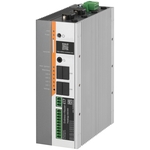
EtherNet/IP is digital communication, expanding our horizons for integration and data use. Following the NAMUR NOA concept, you can pull information from your network directly, using an edge device, and send it to various kinds of cloud services. For instance, the Netilion IIoT ecosystem from Endress+Hauser now supports EtherNet/IP devices in several ways; you can use them in Analytics, Library, Health, and Value services, and third-party devices in Analytics and Library. These services enhance your data, providing you with the right information anywhere you are. Each service has relevant benefits for daily tasks.
IIoT services are an easy way to access relevant insights from your field instrumentation. They provide you with a comfortable and secure way to integrate with the cloud and step forward in your industry, advance to new levels in maintenance, enhance production, and more.