Hygienic thermometers
Compact and modular temperature sensors in hygienic design for sterile processes and applications in the life sciences, food and beverage industries
F
L
E
X
Simple products
Easy to select, install and operate
Technical excellence
Simplicity
Standard products
Reliable, robust and low-maintenance
Technical excellence
Simplicity
High-end products
Highly functional and convenient
Technical excellence
Simplicity
Specialized products
Designed for demanding applications
Technical excellence
Simplicity
FLEX selections
Technical excellence
Simplicity
Fundamental selection
Meet your basic measurement needs
Technical excellence
Simplicity
Lean selection
Handle your core processes easily
Technical excellence
Simplicity
Extended selection
Optimize your processes with innovative technologies
Technical excellence
Simplicity
Xpert selection
Master your most challenging applications
Technical excellence
Simplicity
Compare
Accuracy
class A acc. to IEC 60751
Response time
t50 = 1 s
Max. process pressure (static)
at 20 °C: 50 bar (725 psi)
Operating temperature range
PT 100:
Max. immersion length on request
up to 600,00 mm (23,62'')
Response time
t50 = 2.5 s
Max. process pressure (static)
at 20 °C: 40 bar (580 psi)
Operating temperature range
Pt100:
Max. immersion length on request
up to 900.00 mm (35.4'')
Response time
t50 = 2,5 s
Max. process pressure (static)
at 20 °C: 40 bar (580 psi)
Operating temperature range
PT 100:
Max. immersion length on request
up to 28'' (711 mm)
Accuracy
class A acc. to IEC 60751
Response time
depending on configuration
Max. process pressure (static)
at 20 °C: 40 bar (580 psi)
Operating temperature range
PT100:
Accuracy
class B acc. to IEC 60751
Response time
depending on configuration
Max. process pressure (static)
at 20 °C: 40 bar (580 psi)
Operating temperature range
PT100 WW:
Max. immersion length on request
48"
Accuracy
class A acc. to IEC 60751
Response time
depending on configuration
Max. process pressure (static)
at 20 °C: 40 bar (580 psi)
Operating temperature range
PT100:
Max. immersion length on request
up to 400 mm (15,75")
Accuracy
class A acc. to IEC 60751
Response time
depending on configuration
Max. process pressure (static)
at 20 °C: 40 bar (580 psi)
Operating temperature range
PT100:
Max. immersion length on request
up to 15.5" (317,5mm)
Accuracy
class A acc. to IEC 60751
Response time
t50 = 1 s
Max. process pressure (static)
at 20 °C: 100 bar (1.450 psi)
Operating temperature range
PT 100:
Max. immersion length on request
up to 600,00 mm (23,62'')
Accuracy
-50...75 °C: <0,5 K
Operating temperature range
-50...150 °C (-58...302 °F)
Hygienic thermometers
Our product finder helps you to search for suitable measuring devices, software or system components via product characteristics. Applicator leads you through an individual product selection via application parameters.
About hygienic thermometers
Our temperature measuring instruments in hygienic design offer highest measurement performance and comply with the strict regulations of the food, beverage and pharmaceutical industries. Our comprehensive compact and modular thermometer portfolio is available with a wide range of industry-standard process connections, smart temperature transmitters, best-in-class sensors and is available with international certificates and approvals.
Our wide range of standardized compact and modular sanitary
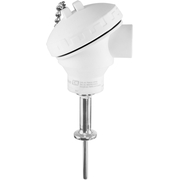
Compact or modular thermometer design Hygienic process connections – clamp, metallic sealing systems, weld-in adapter, Varivent, compression fittings… Variety of RTD sensor designs – basic or high-performing Thermometers with thermowell – easy and safe replacement / recalibration Thermometers without thermowell – direct medium contact: fastest response times and highest accuracy Thermometers with or without transmitter Thermometers with or without display Hygienic thermowells – including tee and elbow thermowells
Modular hygienic thermometers
Our iTHERM ModuLine family is the latest generation of modular thermometers for industrial and hygienic applications. With a manageable number of products, we can meet almost any process and customer requirement. Innovative technologies provide added values such as improved process efficiency or plant and product safety. Examples include iTHERM QuickSens and iTHERM QuickNeck. Certifications according to international standards complete the offering.
Benefits
Modular design: flexible product selection and the best solution for every applicationOver 50 hygienic process connections available as standard Selection of communication protocols to suit any type of integration, e.g. 4 to 20 mA, HART®, IO-Link iTHERM QuickSens : fastest response times for optimum process control, t90: 1.5 siTHERM QuickNeck : Divisible neck with quick-release enables tool-free and easy measuring insert removal for recalibrationGlobal certificates and approvals, e.g. explosion protection as per ATEX/IECEx, CSA, FM, EAC, JPN Ex, NEPSI; hygienic design standards according to 3-A, EHEDG, ASME BPE, FDA, Food Contact Materials (FCM), TSE Certificate of Suitability
©Endress+Hauser
©Endress+Hauser
©Endress+Hauser
©Endress+Hauser
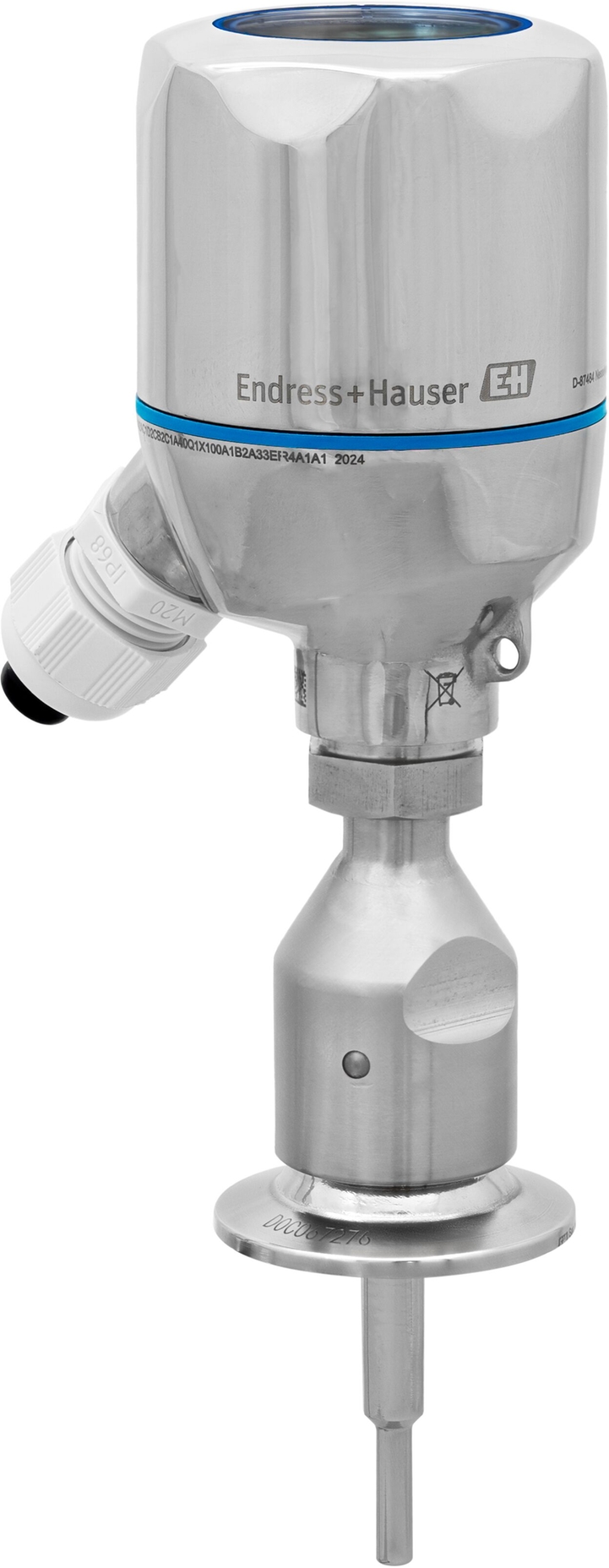
Modular, accurate and fast temperature measurement - iTHERM TM411 (metric) / TM412 (imperial)
iTHERM ModuLine Modular thermometers for hygienic and aseptic applications
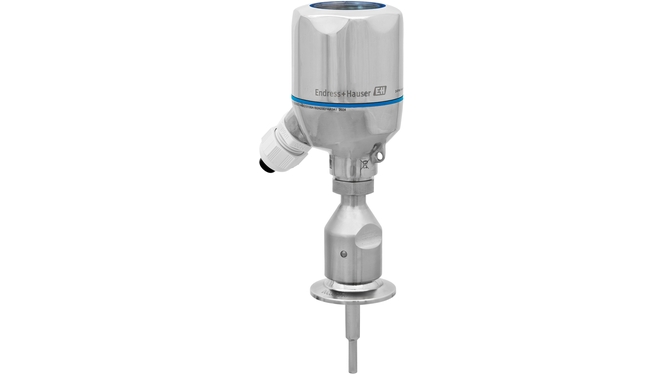
iTHERM QuickNeck Divisible neck with quick-release for easy and safe recalibration
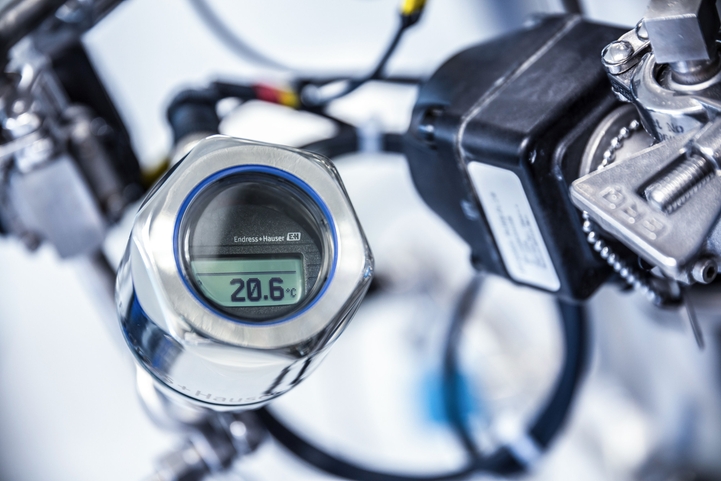
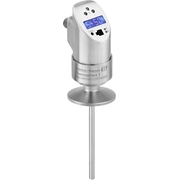
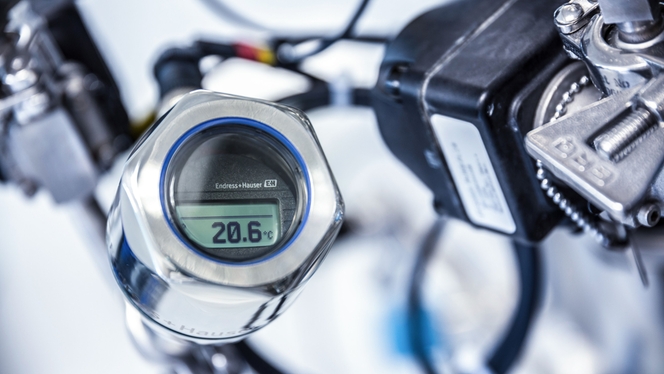
iTHERM TM411 (metric) / TM412 (imperial) with optional digital display TID10
Modular, accurate and fast temperature measurement - iTHERM TM411 (metric) / TM412 (imperial)
iTHERM ModuLine Modular thermometers for hygienic and aseptic applications
iTHERM QuickNeck Divisible neck with quick-release for easy and safe recalibration
iTHERM TM411 (metric) / TM412 (imperial) with optional digital display TID10
Compact hygienic thermometers
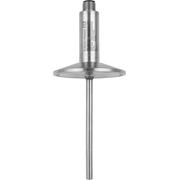
Our iTHERM CompactLine family has been thoughtfully designed to avoid unnecessary complexity and achieve a balanced price/performance ratio. Ready to use and versatile, these instruments are designed for a wide range of applications in the life sciences, food & beverage, and general process industries. With the iTHERM TrustSens , Endress+Hauser has developed the world's first self-calibrating temperature sensor technology specifically designed for hygienic applications that require strict compliance to FDA and GMP regulations.
Benefits
Compact design: integrated transmitter, small size and cost effectivenessOver 50 hygienic process connections available as standard Selection of communication protocols to suit any type of integration, e.g. 4 to 20 mA, HART®, IO-Link Global certificates and approvals, e.g. explosion protection as per ATEX/IECEx, CSA, hygienic design standards according to 3-A, EHEDG, ASME BPE, FDA, Food Contact Materials (FCM), TSE Certificate of Suitability
©Endress+Hauser
©Endress+Hauser
©Endress+Hauser
©Endress+Hauser
iTHERM CompactLine TM311 - compact, accurate and versatile
iTHERM CompactLine TM311 - ideal for critical hygienic applications in life sciences and food & beverage
iTHERM TrustSens TM371 (metric) / TM372 (imperial) with self-calibrating Pt100 sensor
iTHERM QuickNeck Divisible neck with quick-release for easy and safe recalibration
iTHERM TrustSens self-calibration explained Taking advantage of the Curie-temperature
iTHERM CompactLine TM311 - compact, accurate and versatile
iTHERM CompactLine TM311 - ideal for critical hygienic applications in life sciences and food & beverage
iTHERM TrustSens TM371 (metric) / TM372 (imperial) with self-calibrating Pt100 sensor
iTHERM QuickNeck Divisible neck with quick-release for easy and safe recalibration
iTHERM TrustSens self-calibration explained Taking advantage of the Curie-temperature
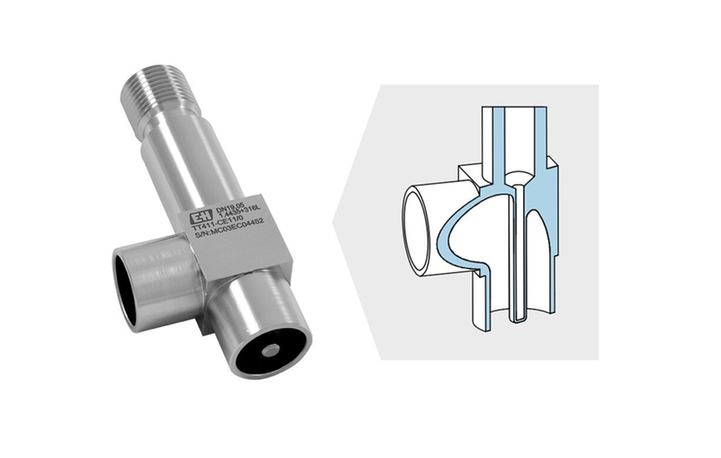
Tee and elbow thermowells
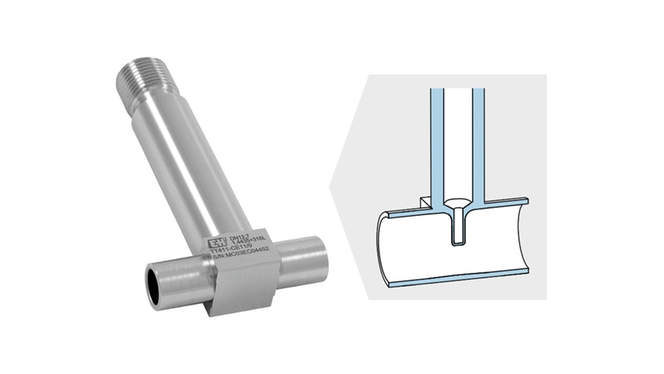
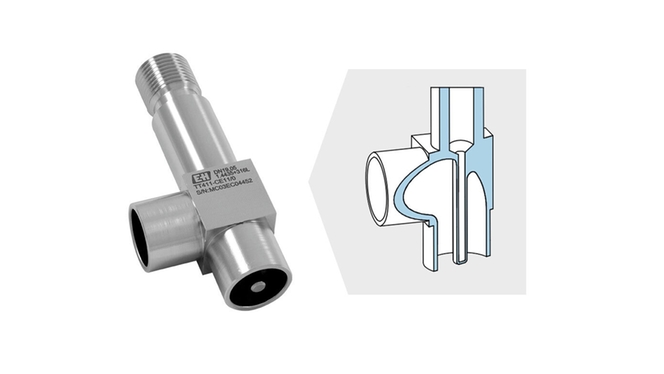
Our Endress+Hauser hygienic thermowells are designed without welds or dead legs , making them easy to clean and ideal for hygienic and aseptic applications. They get welded into the process piping, are non-dismantable and are milled from a single piece of stainless steel . Even with very short immersion lengths, these thermowells are ideal for the use in hygienic or aseptic pipes, vessels or tanks.
©Endress+Hauser
©Endress+Hauser
©Endress+Hauser
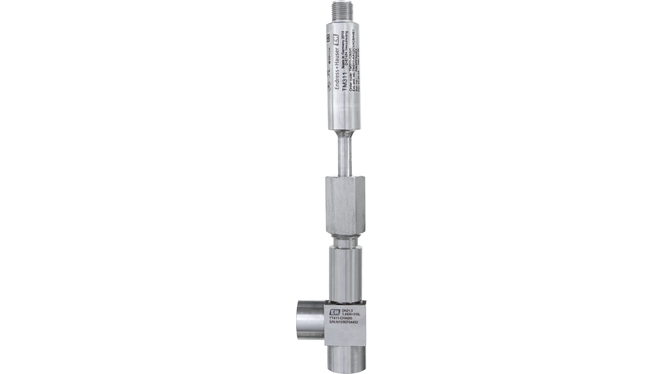
iTHERM CompactLine TM311 with mounted elbow thermowell TT411
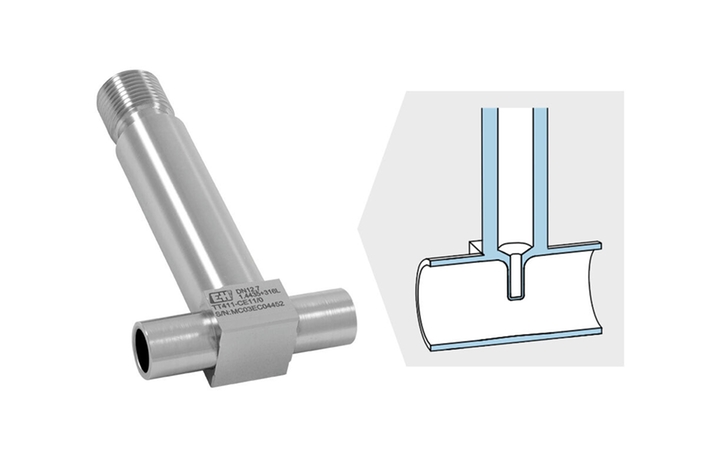
Tee thermowell Straight pipe segment joined to a thermowell, with the thermowell projecting into the pipe segment at a 90° angle
Elbow thermowell Pipe elbow and thermowell, with the thermowell projecting straight into one side of the pipe bend.
iTHERM CompactLine TM311 with mounted elbow thermowell TT411
Tee thermowell Straight pipe segment joined to a thermowell, with the thermowell projecting into the pipe segment at a 90° angle
Elbow thermowell Pipe elbow and thermowell, with the thermowell projecting straight into one side of the pipe bend.
Related content
News, events and more...
Related topics
Technology, construction and benefits of resistance temperature detecors (RTDs) in temperature measurement.
Basics & functional principles
What is a hygienic thermometer?
A hygienic thermometer is a sanitary temperature sensor specially designed for reliable temperature measurement in hygienic and aseptic processes (also referred to as a sanitary temperature transmitter or hygienic temperature probe). It supports temperature measurement in the food and pharma industries and is built for sterile and clean production environments where contamination prevention is critical. Its hygienic design helps ensure that the instrument does not negatively influence the process or product and is not negatively influenced by the cleaning procedures.
What are the benefits of a hygienic thermometer?
The main benefits of a hygienic thermometer are reduced risk of contamination of products, better cleanability and easier compliance in regulated processes. Hygienic design, suitable material surfaces and hygienic process connections make the thermometer fit food, beverage and pharma applications without compromising cleaning performance.
Another key benefit is the availability of certifications and standards. Depending on the device, hygienic thermometers can comply with EHEDG, 3-A and ASME BPE requirements and support food contact material (FCM) compliance according to FDA, EU 1935/2004 and China GB 4806 regulations. In practice, this means that the thermometer is designed not only to measure temperature, but also to support hygienic operation and regulatory expectations.
At Endress+Hauser, we have already done the groundwork by developing a dedicated hygienic thermometer portfolio with the relevant options needed to configure the right solution for different sanitary applications.
What are the key applications of hygienic thermometers?
Hygienic thermometers are widely used in process lines, vessels, tanks and fermenters across food, beverage and life sciences industries.Which hygienic process connections are available?
Key applications include:
CIP (cleaning-in-place) / SIP (sterilization-in-place) Pasteurization (HTST) / Milk pasteurization / UHT processes Fermentation and bioreactor temperature monitoring Filling and bottling lines Brewing vessels Storage tanks, mixing and blending processes Heat exchangers and thermal treatment systems Sterile filtration systems Pharmaceutical utility systems (WFI, clean steam and purified water loops) Chiller and refrigeration systems
Which hygienic process connections are available?
Typical hygienic process connections for thermometers include clamp , weld-in adapter , Varivent , Ingold , dairy fitting DIN 11851, tri-clamp connection and other options. The right choice depends on installation specs and the plant standard, the hygienic installation concept and the application itself.
Why is an RTD sensor the better choice for hygienic processes?
RTD (Resistance Temperature Detectors) sensors are mostly chosen for hygienic processes because they offer higher accuracy, better repeatability and stronger long-term stability than TC (thermocouples) sensors in the moderate temperature range typical of many food, beverage and pharmaceutical applications.
Another advantage is the nearly linear signal of an RTD, which makes calibration and interpretation easier. RTDs are also well suited to the max temperature ranges commonly found in hygienic processes, where accurate and repeatable measurement is more important than extreme high-temperature capability.
Unlike thermocouples, RTDs do not rely on thermoelectric compensation cable concepts. Instead, measurement accuracy is typically improved through 3-wire or 4-wire wiring or the use of a transmitter to compensate lead-wire resistance.
Should I use a direct-contact sensor or a thermowell for hygienic applications?
The choice between a direct contact sensors and thermowells depends on response time requirements and further process information. In a direct contact design, the sensor stem is directly exposed to the process. It is typically chosen when fast response to temperature changes is critical, for example in CIP/SIP processes with dynamic temperature profiles.
A thermowell is preferred when additional hygienic sensor protection, mechanical robustness or easier serviceability are required.
Endress+Hauser offers patented fast-responding thermowells that specifically address this trade-off: they enable quick response times while maintaining a closed process, along with a robust construction and easier serviceability.
What’s the difference between compact and modular sanitary thermometers?
Compact and modular hygienic thermometers differ mainly in flexibility, serviceability, spare parts strategy, insert exchange and lifecycle cost.
Compact thermometers such as Endress+Hauser iTHERM CompactLine TM311 are designed for simple installation, minimal space requirement and standardized measurement tasks. They typically follow a fixed design with limited options for spare parts or insert exchange.Modular hygienic thermometer s such as Endress+Hauser iTHERM ModuLine TM4xx allow inserts, transmitters and process connections to be replaced independently. They are specially designed for sensor exchange without replacing the full device , support hygienic standardization strategies and reduce lifecycle cost. Another key benefit of modularity is the ability to add temperature transmitters with different transmission protocols, advanced diagnostics and predictive maintenance functions.
Show more
Show less
Design, materials & specification
Which materials for process-wetted parts of hygienic thermometers are recommended?
For hygienic and pharmaceutical applications, 316L stainless steel is the established standard for process-wetted parts due to its corrosion resistance, weldability and suitability for hygienic design. In pharmaceutical environments, material selection must also address extractables and leachables requirements (e.g. USP <665>) , as well as defined material quality and surface conditions. In high-purity systems such as biotech or WFI, low delta ferrite content and controlled surface finishes can be required.
Low delta ferrite is particularly relevant because it helps reduce the risk of rouging , supporting cleanability and long-term surface integrity. Compared to 316, 316L reduces corrosion risk after welding and supports crevice-free designs , which is why it is widely used in standards such as ASME BPE and EHEDG.
In Endress+Hauser hygienic thermometers, all wetted parts are made exclusively of stainless steel in direct contact with the process. This material is fully compliant with FDA requirements and supports hygienic and regulatory conformity.
Why does surface roughness (Ra) matter for hygienic temperature sensors?
Surface roughness (Ra) determines how easily a hygienic temperature sensor can be cleaned and how effectively hygienic conditions are maintained. It is important because smoother surfaces are easier to clean and help reduce the risk of residue build‑up and biofilm formation .
A surface roughness of ≤ 0.8 µm (32 µin) is a common hygienic design target, as it supports cleanability and is widely accepted for stainless steel surfaces in contact with the medium in food and pharmaceutical applications.
Which sealing materials are suitable for sanitary temperature sensors?
Suitable sealing materials ensure compatibility with process media and CIP/SIP cleaning conditions in hygienic applications. They depend on the process medium, cleaning conditions and regulatory requirements. Common materials for hygienic applications include EPDM, FKM and PTFE , provided that the selected compound is suitable for food or pharmaceutical contact and compatible with CIP/SIP conditions . The choice should consider temperature resistance, chemical resistance, aging behavior, swelling, extractables/leachables risk and possible contamination impact.
EPDM is often used for hot water, steam and many cleaning media. FKM can be suitable for oily or fatty media and many cleaning agents, depending on the compound. PTFE offers very broad chemical resistance and is often used for demanding cleaning conditions.
Metal-to-metal sealing concepts should be evaluated carefully , especially if the connection is opened and reassembled, because damaged or deformed sealing surfaces can impair cleanability and increase the risk of crevices.
When should I use a tee thermowell and when an elbow thermowell?
Elbow thermowells are usually preferred in hygienic installations because they improve drainability and cleanability due to their eliminiation of dead space and their ability to provide good sensor immersion in the main flow for improved thermal response.
A tee thermowell is typically used in straight pipe sections where no elbow is available or where installation simplicity and accessibility are the main drivers.
What does IP69K actually mean and do I need it for washdown cleaning?
IP69K washdown rating means the hygienic temperature sensor is designed to withstand intensive external cleaning. In hygienic industries, it is especially useful for hygienic sensors high-pressure washdown applications where strong cleaning exposure is common, e.g. with water or hot steam jets which are typically used in food and life sciences cleaning procedures.
This high ingress protection level supports durable sealing and protects the device during demanding high‑pressure cleaning procedures, making it a strong choice for washdown environments.
Are all communication protocols available in all hygienic thermometers from Endress+Hauser?
Available communication protocols depend on the thermometer design. Our company's modular hygienic thermometers offer the highest flexibility. Depending on the device specs and the selected transmitter, they support the complete range of communication protocols, including IO‑Link and Ethernet‑APL.
Our compact hygienic thermometers , by contrast, integrate the sensor and transmitter in a fixed design. To keep installation simple and cost‑efficient, they typically offer a limited set of interfaces, such as 4–20 mA or IO‑Link, depending on the device.
Which temperature sensor is best suited for single-use biopharma applications?
In single-use biopharma systems, all components in direct contact with the process medium are designed for single use. However, temperature measurement in single-use bags is typically realized using a silicone protection tube, meaning the sensor itself remains reusable (multi-use). Suitable options include the flexible cable probe iTHERM CableLine TST310 for easy integration into single-use assemblies, or the compact thermometer iTHERM CompactLine TM311 , which offers very fast response times and reliable measurements.
Show more
Show less
Installation, operation & maintenance
What typical mistakes should be avoided when installing and cleaning hygienic thermometers?
Avoid installations that create dead spaces, hard-to-clean corners, low-flow zones or non-self-draining areas. The measuring point should be positioned where the sensor is properly exposed to the process medium and where CIP/SIP flow can reach and clean the area effectively.
In small pipes , the available immersion length is often limited, with the sensor stem not sufficiently being inserted into the process flow, which can increase measurement deviations. In these cases, an elbow installation can be preferable to a tee piece because it can provide a better insertion position while supporting hygienic design.
How often do I need to recalibrate temperature sensors?
Calibration intervals for hygienic temperature sensors depend on process criticality, regulatory requirements and operating conditions. The number of calibrations is defined by a risk-based approach considering process criticality and environmental conditions (e.g., vibration, temperature), rather than fixed rules. In industry practice, typical intervals are 3–6 months for critical processes, while highly critical measuring points are often verified or calibrated before each batch.
Can I replace or recalibrate the sensor without rewiring and opening the process?
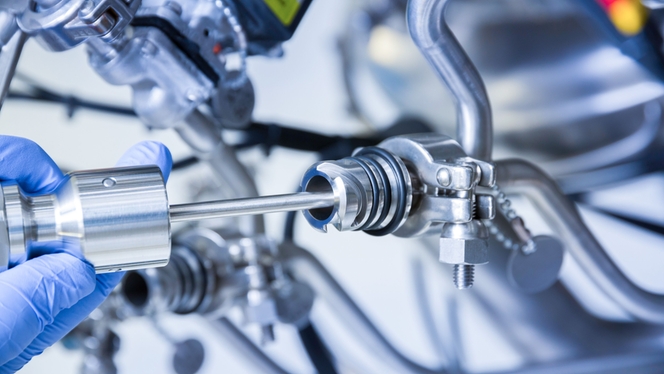
Yes, with the Endress+Hauser iTHERM QuickNeck . The divisible extension neck with tool-free quick release for easy & fast recalibration enables tool-free removal of the sensor insert, allowing replacement or recalibration without opening the process connection or disconnecting wiring. The hygienic seal remains intact throughout the procedure. This design supports hygienic maintenance, reduces downtime, and eliminates the risk of contamination during service.
iTHERM QuickNeck is available in iTHERM TrustSens TM371 / TM372 and modular iTHERM ModuLine TM4xx thermometers.
How can I reduce downtime when recalibrating hygienic temperature sensors?
Downtime in hygienic processes can be significantly reduced by choosing temperature sensors that eliminate or minimize service interruptions . iTHERM TrustSens TM371 (metric) / TM372 (imperial) enables fully automated in‑situ self‑calibration. This means the sensor performs regular calibration checks during operation without removing the device or stopping the process.
For applications requiring manual recalibration, the divisible extension neck iTHERM QuickNeck allows fast and tool‑free removal of the sensor insert without opening the process or disconnecting wiring. This significantly shortens maintenance time and simplifies service.
How can I reduce cleaning costs in hygienic process installations?
Cleaning costs can be reduced by combining optimized hygienic design with controlled, condition-based cleaning . From a design perspective, flush-mounted connections, crevice-free components and self-draining geometry are essential. Avoiding dead spaces, gaps and dead legs improves cleanability and reduces cleaning time, as well as water, chemical and energy consumption. Hygienic installation concepts such as dead-leg-free thermowells further support efficient CIP/SIP processes.
Cleaning can also be optimized by moving from fixed intervals to condition-based cleaning . Instead of cleaning after a predefined time, cleaning is only performed when necessary, for example based on fouling or buildup detection (e.g. via level or flow measurement).
Accurate control of cleaning conditions is equally important. CIP temperature directly affects the effectiveness of cleaning agents (acids and caustics). Highly accurate and fast-response temperature measurement ensures that target temperatures are reached quickly and maintained reliably, avoiding both underperformance and unnecessary energy consumption.
Why is fast response time so important in hygienic processes?
In control loops, it is essential that actuators and sensors work well together to operate the process under optimal conditions. If temperature sensors respond too slowly, significant temperature overshoot and undershoot can occur. This leads to energy waste and, at the same time, reduces product quality. Therefore, fast-response thermometers are essential for accurate control, especially in fast-changing processes.
How can I decrease deviations in hygienic processes?
Deviations in hygienic temperature measurement are often caused by installation effects rather than sensor accuracy , especially in systems with small pipe diameters and limited insertion length. The main objective is to ensure that the sensor measures the actual process temperature, not the influence of the surroundings . Typical issues are too short insertion lengths, heat dissipation via the connection, or unfavorable installation positions such as tee thermowells.
In practice, deviations can be reduced by:
maximizing insertion length wherever possible. For installation in a pipe, an immersion length is recommended that ideally corresponds to half the pipe diameter. preferring elbow thermowells for better flow exposure and longer immersion length using fast-response or reduced-tip designs for improved thermal coupling, e.g. Endress+Hauser iTHERM QuickSens or TipSens
How can I minimize product contamination risks in hygienic processes?
Product contamination risks can be minimized by using hygienic process connections and installation designs that avoid dead spaces, crevices and retained product .
The temperature measuring point should be easy to clean, suitable for CIP/SIP and designed to prevent product buildup. For most applications, a thermowell is the preferred solution and industry standard, because the process remains closed during maintenance or recalibration .
Endress+Hauser offers a wide range of hygienic process connections. Specific tee and elbow thermowells without welds or dead legs support cleanability and help reduce contamination risk in pipes, vessels or tanks.
How can I detect drift in aseptic processes?
Common methods for detecting drift in hygienic temperature measurement include laboratory calibration, on-site calibration, sensor comparison, and automated in-situ self-calibration.
For standard applications, modular hygienic thermometers with transmitters (iTEMP TMT82 , TMT84 , TMT85 , TMT86 , TMT162 ) enable drift detection through dual‑channel measurement and continuous sensor monitoring. The transmitters use two sensor inputs to compare measurement signals in real time. If the deviation between the two sensors exceeds a defined limit, the device generates a drift warning.
For critical control points (CCPs) or compliance‑relevant applications , iTHERM TrustSens (TM371 metric / TM372 imperial ) provides a higher level of reliability through automated and traceable in‑situ self‑calibration. Instead of comparing two sensors, the device verifies its accuracy against an internal physical fixed point as a reference and can therefore detect drift directly during operation without removing the sensor or interrupting the process.
What documentation and traceability information are required for hygienic temperature measurements?
The documentation and traceability requirements for hygienic temperature measurements depend on the industry and process criticality, but generally focus on two core elements: calibration with metrological traceability and equipment qualification .
Instruments must be regularly calibrated with documented, traceable links to recognized national standards, including defined uncertainty and audit-ready calibration certificates proving accuracy (e.g. ISO accredited calibration). In parallel, sensors must undergo formal qualification to demonstrate correct installation, functional performance, and suitability for hygienic processes. Supporting documentation typically includes 3.1 inspection certificates (EN 10204) for material traceability , food contact or FDA conformity certificates for wetted parts , as well as SOPs and secure, audit-trailed measurement records, ensuring the system is both technically reliable and fully compliant.
Show more
Show less
We value your privacy
We use cookies to enhance your browsing experience, collect statistics to optimize site functionality, and deliver tailored advertisements or content.
By selecting "Accept all", you consent to our use of cookies.cookie policy .
Customize
Accept only essential
Accept all


.jpg)



.jpg)


.jpg)